2026 Top Drive-in Storage Racking Suppliers?

Time:2026-09-27 Author:Ethan
0%

Drive-in Storage is designed for warehouses that hold many pallets of the same product. Forklift trucks enter the rack lanes, placing pallets on rails rather than relying on separate aisle access. The result can be impressive density. It can also make stock rotation and access less flexible.

Edward Frazelle, a warehouse-design specialist and author, offers a useful principle, paraphrased here rather than presented as a verbatim quotation: “Design storage around product flow, not density alone.” That distinction matters when comparing suppliers for 2026. A rack may look efficient on a drawing, yet perform poorly when pallet sizes vary or replenishment becomes frequent.

This guide examines suppliers through practical questions: Can their systems match your pallet dimensions, forklift fleet, and operating patterns? Do their proposals clearly specify rail capacity, frame protection, installation scope, and inspection support? Ask for references from facilities with comparable loads, not only polished photographs. Check how the supplier handles damaged components and future expansion. Small details count.

There is a trade-off. Drive-in Storage suits carefully planned, high-volume inventory, but it is not a universal answer. A rushed choice can leave deep lanes underused or create awkward retrieval routines. This overview helps buyers compare leading suppliers, test claims, and identify questions worth asking before requesting a final quotation. Good specifications matter more than confident sales language.
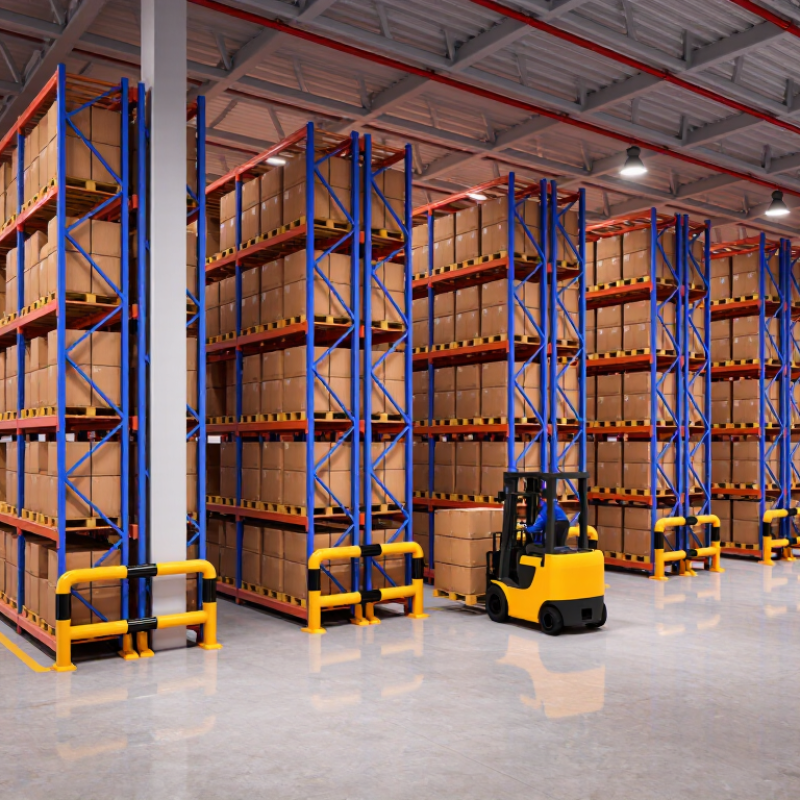
2026 Top Drive-in Storage Racking Suppliers?

What Drive-In Storage Racking Is and How It Works

Drive-in storage racking is a high-density system that lets a forklift enter a storage lane to place or retrieve pallets. Instead of using an aisle for every rack row, several pallets sit deep along shared support rails. The forklift travels into the lane, raises a pallet, and rests it on the rails. It then backs out carefully. Simple in concept. Precision matters.

Most drive-in lanes are loaded and unloaded from the same end. This usually creates last-in, first-out access: the newest pallet goes in front of older stock. The arrangement suits products stored in large batches, with consistent pallet sizes and slower rotation. It can save floor space, but it reduces direct access to individual pallets. That trade-off is easy to underestimate.

Safe operation depends on more than rack dimensions. Pallet condition, load weight, forklift turning clearance, floor levelness, and rail protection all affect performance. Before installation, a qualified designer should review the building, inventory, and handling equipment. In daily use, operators need clear lane markings and training to avoid striking rails or uprights. Small impacts can matter. Drive-in racking is not automatically the best choice; changing product mixes can make its deep lanes awkward. A site assessment helps reveal that before space is committed.

How Drive-In Racking Fits Different Warehouse Operations

2026 Top Drive-in Storage Racking Suppliers?
How Drive-In Racking Fits Different Warehouse Operations

Drive-in racking suits warehouses holding many pallets of the same product with predictable stock rotation. Forklifts enter guided lanes and place pallets on side rails, reducing the number of access aisles. This can free floor space for seasonal goods, beverage cases, or production ingredients. Space matters. The trade-off is selectivity: operators usually retrieve the nearest pallet first. Strict first-in, first-out rotation may call for a drive-through layout instead. That sounds tidy on paper, but mixed pallet sizes can complicate lane planning.

In cold stores, fewer aisles may mean less space to refrigerate. However, rail protection, load limits, and clear forklift procedures need careful planning. High-throughput sites may find shared lanes slow during peak shifts, especially when replenishment and picking overlap. Small, frequent orders often work better with accessible pallet positions nearby. Before specifying lane depth, assess pallet dimensions, load weights, forklift clearance, floor condition, and daily movements. Measure actual work patterns, not just the floor plan.

Tips: Keep each lane to one product where practical, mark capacity clearly, and train drivers to enter squarely. Arrange qualified inspections of rails, uprights, and anchors. Test the retrieval sequence with real pallets before installation. Not always. A layout that works well on a drawing may need adjustment once daily operations begin.

What to Compare When Evaluating Suppliers in 2026

When comparing drive-in racking suppliers in 2026, start with your actual loads and handling pattern, not a price per bay. Share pallet dimensions, maximum weight, forklift model, aisle width, and clear building height. Ask for a layout showing lane depth, entry clearance, and the intended last-in, first-out flow. Deep lanes can save floor space, but they restrict access to individual pallets. Small details matter.

Request project-specific load calculations and drawings, then confirm how the supplier accounts for slab condition, rack protection, and local seismic requirements. Ask who checks installation tolerances and what inspection guidance comes with handover. Compare warranties, replacement-part availability, response times, and the cost of future changes—not just the initial quote.

MHI’s 2024 Annual Industry Report found that 55% of respondents viewed AI as a potential game changer or competitive advantage in supply chains. That is not rack-specific data, but it supports asking whether a supplier can provide useful digital inspection records and inventory documentation.

Measure twice. Still, digital records do not replace competent site inspections or clear responsibility for damage.

Ask for references from facilities with similar pallet loads and operating conditions. A polished drawing is helpful, but it cannot reveal how quickly a supplier resolves a damaged upright or a fit problem during installation. Compare evidence, not promises.

How to Assess Supplier Quality, Safety, and Support

How to Assess Supplier Quality, Safety, and Support

Drive-in racking concentrates pallets in deep lanes, so a small design mismatch can affect many storage positions. Ask suppliers for project-specific drawings, rated load data, and clearances matched to your pallets and forklifts. Check weld quality, upright protection, beam connections, and whether replacement parts can be supplied consistently. Small details matter. A polished brochure is not proof of a reliable installation; request references for comparable cold-storage or high-throughput sites, where relevant.

Safety support should continue after delivery. Ask who checks the floor, anchors, and impact protection, and how damage should be reported and assessed. The U.S. Bureau of Labor Statistics recorded 5,283 fatal work injuries in 2023, in its Census of Fatal Occupational Injuries. This figure is not specific to storage racks, but it underlines why safety procedures and training deserve close review. Confirm that the supplier provides installation records, operator guidance, and practical inspection criteria. A scorecard still misses things.

Tips: Ask for a sample inspection checklist and a written response-time commitment for damaged components. Compare the supplier’s proposed layout with actual forklift paths, not just a clean drawing. If details remain vague, pause and ask again. No checklist replaces a site walk; involve the people who move pallets every day.

2026 Drive-In Storage Racking Supplier Assessment

Suggested evaluation weights for comparing suppliers. Prioritize safety and engineering evidence, then assess quality controls and ongoing support. These percentages are a proposed scoring framework, not market-survey results.

Steps for Selecting and Implementing a Drive-In Racking System

Selecting a drive-in racking system starts with the inventory, not the rack drawing. Record pallet dimensions, loaded weight, and how many pallets share each product line. Drive-in racks suit deep storage of similar items, but they usually follow last-in, first-out access. That trade-off matters. If older stock must move first, another layout may work better.

Measure the building carefully, including clear height, columns, sprinklers, and floor condition. Then map the forklift’s turning space and the required aisle width. Small details matter. Check that pallet loads fit the rails with safe clearance, and ask a qualified rack designer to verify capacity and structural requirements. A spreadsheet helps, but it can miss uneven pallet bottoms or changing load weights. Recheck real pallets before approving the design.

During installation, keep the work area clear and confirm each frame and beam matches the approved layout. Protect exposed frame ends near vehicle routes. Before loading, test travel paths with the intended forklift and an empty pallet. Then add loads gradually and train operators to enter lanes straight, place pallets gently, and report impact damage. Inspect regularly, especially after a collision. The first layout may feel efficient on paper; daily use can reveal awkward turns or blocked access, so leave room to adjust.

FAQS

What is drive-in storage racking?

It stores pallets several positions deep on shared rails. A forklift enters the lane to place or retrieve loads. Precision matters.

Which products suit this system?

It works best for large batches with similar pallet sizes and slower rotation. Changing product mixes can make deep lanes awkward.

How does pallet access work?

Most lanes are loaded and unloaded from the same end. This usually means last-in, first-out access. Older stock can be harder to reach.

What should be checked before installation?

Measure pallet sizes, loaded weights, building height, columns, sprinklers, and floor condition. Check forklift turning space too. Small details matter.

How can supplier quality be assessed?

Request project-specific drawings, rated load data, and clearances for your pallets and forklifts. Review welds, connections, and replacement-part availability. A brochure is not proof.

What safety support should be available?

Ask for installation records, operator guidance, and inspection criteria. Confirm how to report damage and who assesses it. No checklist replaces a site walk.

How should operators use the lanes?

They should enter straight, place pallets gently, and avoid striking rails or uprights. Keep lane markings clear. Report impacts promptly.

How can the layout be tested before full use?

Test travel paths with the intended forklift and an empty pallet. Add loads gradually, then watch for awkward turns or blocked access. Paper plans can miss things.

When should the rack be inspected?

Inspect regularly, especially after a collision. Check rails, uprights, anchors, and impact protection. Small impacts may matter more than they look.

Conclusion

Drive-in Storage racking is a high-density system that allows forklifts to enter storage lanes and place pallets on supported rails, making it especially useful for storing large quantities of similar products. Its last-in, first-out access pattern can suit operations with predictable inventory rotation, limited warehouse space, and fewer product variations, while other facilities may need to balance density with faster access to individual pallets.

When comparing suppliers in 2026, consider system design, load capacity, compatibility with handling equipment, installation services, lead times, and ongoing support. Assess the quality of materials and components, the clarity of safety guidance, and the supplier’s ability to provide inspections, maintenance, and staff training. A practical selection process begins with reviewing inventory and workflow needs, then confirming site measurements and operating requirements. Before implementation, plan the layout, installation schedule, safety procedures, and team training so the finished system supports efficient, reliable warehouse operations.

Ethan

Ethan

Ethan is a seasoned marketing professional with a deep expertise in our company's innovative product line. With a passion for sharing knowledge and insights, he takes the lead in regularly updating our corporate blog, where he explores industry trends, product features, and effective marketing......