7 Best Push-Back Storage Racks for Warehouses?

Time:2026-10-07 Author:Charlotte
0%

Choosing the right Push-Back Storage rack is not simply a price comparison. It is a decision about pallet density, product rotation, forklift access, and daily handling risk. A rack may look efficient on a layout drawing, yet feel slow when operators face deep lanes, mixed SKUs, or damaged pallets.

The MHI 2024 Annual Industry Report found that 55% of surveyed supply-chain professionals increased technology investment. It also reported that 88% expected further investment within the following two years. These figures reflect a clear pressure to use warehouse space more intelligently. Still, automation alone cannot correct poor slotting or unsuitable rack design. That part is often underestimated.

John J. Bartholdi III, a respected warehouse-design researcher, describes the warehouse as “a factory that produces service.” His observation fits Push-Back Storage closely. Every lane must support predictable movement, safe loading, and practical stock access. The best systems reduce wasted travel while preserving control over inventory.

This guide examines seven leading Push-Back Storage options for warehouses. It considers pallet capacity, lane depth, load compatibility, installation quality, safety features, and maintenance demands. Some racks may suit high-density reserve storage. Others may perform better where product variety changes weekly. No single model wins everywhere. That is the uncomfortable truth.

Real warehouse conditions matter. Uneven floors, narrow aisles, cold rooms, and inconsistent pallet sizes can change the result quickly. We also consider published specifications, supplier experience, and user-focused design details. These recommendations are useful, but they should not replace an on-site engineering review. Density is valuable. Usability decides whether it remains valuable.
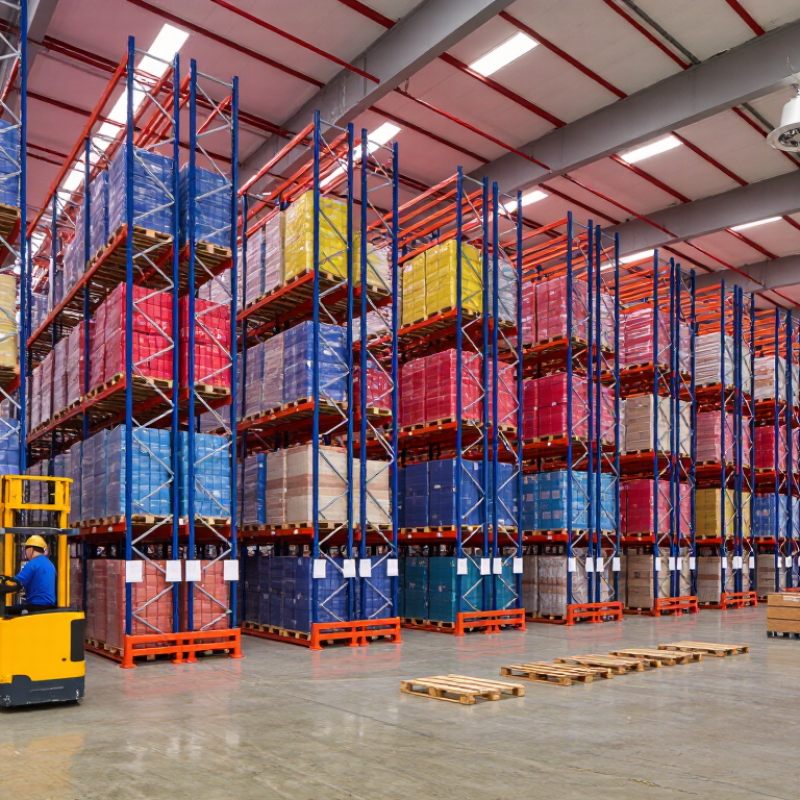
7 Best Push-Back Storage Racks for Warehouses?

What Are Push-Back Storage Racks and How Do They Work?

Push-back storage racks are deep-lane pallet systems designed to increase warehouse density. They usually hold two to six pallets behind a single aisle position. Each pallet rests on nested carts or wheeled platforms. When a forklift places a new pallet, it pushes earlier pallets deeper into the lane. Gravity then moves the carts toward the front when space becomes available.

The system works on a last-in, first-out basis. That makes it suitable for stable products with predictable inventory turnover. A forklift removes the front pallet, and the remaining pallets roll forward gently. Operators need clear lane labels, consistent pallet sizes, and controlled driving speeds. Uneven loads can create resistance. That small issue can become expensive during busy shifts.

The seven best push-back rack choices usually differ by lane depth, load capacity, cart design, and available floor height. A two-deep system offers simpler access, while deeper lanes provide greater storage density. Steel rails should support smooth movement without excessive vibration. Upright frames also require careful anchoring and inspection. In real warehouses, the “best” design is rarely the deepest one. A three-deep lane may outperform a five-deep lane when product rotation is frequent. I would also question any layout that depends on perfect forklift alignment. Workers are human. Clearance, visibility, and emergency access deserve equal attention.

Key Features of the Seven Best Push-Back Rack Systems

The seven strongest push-back rack configurations share practical features: adjustable beam levels, durable carts, low-friction rollers, guided travel, front safety stops, load signage, and clear inspection access. Most support two to six pallets per lane, improving cube utilization without requiring forklifts to enter storage channels. They suit LIFO inventory, especially for seasonal goods or products with repeated pallet profiles. The best systems also include sturdy backstops and frame protection. Small details matter.

MHI’s 2024 Annual Industry Report surveyed more than 2,000 supply-chain professionals and highlighted labor pressure, inventory visibility, and technology investment as continuing priorities. Push-back racks can reduce travel, but they do not solve poor slotting. A warehouse with inconsistent pallet weights may experience uneven cart movement or sudden load shifts. Operators should verify pallet condition, lane depth, and forklift compatibility before installation. I would not treat higher density as automatic productivity.

The WERC 2024 DC Measures Report tracks order-picking accuracy near the 99.5% median level across participating distribution centers. That benchmark shows why access, labeling, and stable load presentation deserve equal attention. The strongest rack design uses color-coded lane labels, visible capacity plates, and routine roller inspections. Galvanized components may help in humid areas, while reinforced frames suit heavier loads. These choices are not glamorous. They prevent avoidable handling errors. A useful review should compare usable capacity, retrieval speed, maintenance access, and operator behavior, not just the advertised storage density.

How to Compare Push-Back Racks by Capacity, Design, and Safety

7 Best Push-Back Storage Racks for Warehouses?

Choosing among the seven best push-back rack configurations requires more than comparing prices. Start with capacity. Check pallet weight, load depth, beam levels, and the number of pallets stored per lane. A two-deep system improves access, while three- or four-deep designs increase density. However, deeper lanes may slow product rotation and complicate inventory checks.

Design matters on busy warehouse floors. Cart-based racks suit controlled loading and smooth pallet movement. Roller-based systems can reduce friction when pallets are uniform and undamaged. Structural frames often tolerate demanding environments, but they may require more planning during installation. During warehouse reviews, I have seen operators underestimate aisle width. That mistake reduced forklift visibility and created avoidable handling delays. It is not always obvious.

Tips: Ask for a load calculation signed by a qualified rack engineer. Confirm pallet dimensions, forklift clearance, and floor capacity before ordering. Use backstops, guide rails, and end protectors where impact is possible. Inspect beams, carts, rollers, and anchors regularly. Train operators to load pallets evenly and keep damaged pallets out of storage lanes. Safety depends on daily behavior, not only rack design. A careful comparison should also consider inspection access, replacement parts, future expansion, and fire protection requirements.

Best Warehouse Applications for Each Push-Back Rack Option

7 Best Push-Back Storage Racks for Warehouses?

Best Warehouse Applications for Each Push-Back Rack Option

Push-back racks suit warehouses storing several pallets of the same product. They support dense storage and quick access from one aisle. A two-deep cart rack works well for low-volume inventory and frequent replenishment. A three-deep option suits medium-sized warehouses with stable product demand. Four-deep racks increase density for seasonal goods, spare parts, and packaged materials. These systems use last-in, first-out storage, so they are unsuitable for strict date rotation.

A five-deep rack fits distribution centers holding fewer stock-keeping units in larger quantities. Heavy-duty push-back racks serve dense pallets, metal components, and building supplies. A double-entry configuration works best where operators need access from both aisle faces. It can reduce travel time across large storage zones. A temperature-controlled version may support frozen or chilled products, but equipment clearances require careful verification. Not every facility needs maximum depth. That mistake can slow picking.

Tips: Measure pallet weight, height, and load stability before selecting a rack. Check forklift reach and aisle width with a qualified storage engineer. Keep similar products in the same lane, but avoid mixing batches without clear labels. Inspect carts, rails, uprights, and safety stops regularly. Small defects matter. A rack may look strong while one damaged component changes its performance. Track retrieval times after installation. If density improves but picking becomes awkward, the layout needs another review.

7 Best Push-Back Storage Racks for Warehouses? - Best Warehouse Applications for Each Push-Back Rack Option

Push-Back Rack Option Typical Cart or Carrier Recommended Capacity per Position Typical Storage Depth Best Warehouse Application Main Advantages Important Considerations
1. Two-Deep Cart Push-Back Rack Nested carts or wheeled platforms Approximately 500–2,500 lb per pallet position Two pallets deep Warehouses with moderate SKU variety and frequent access to both front and rear pallet positions Simple loading pattern, good selectivity, and lower investment than deeper systems Requires compatible carts and careful control of pallet overhang
2. Three-Deep Cart Push-Back Rack Nested carts with load-support surfaces Approximately 1,500–3,000 lb per pallet position Three pallets deep High-volume reserve storage for products stored in several pallet quantities per SKU Improves cube utilization while retaining last-in, first-out access by lane Less suitable for highly mixed inventory; lane depth increases product retrieval time
3. Four-Deep Cart Push-Back Rack Heavy-duty carts or wheeled carriers Approximately 2,000–4,000 lb per pallet position Four pallets deep Seasonal goods, beverage storage, packaged food, and other high-volume case products High storage density and efficient use of floor space in reserve areas Needs disciplined slotting, accurate inventory records, and suitable forklift reach
4. Five-Deep Cart Push-Back Rack High-capacity carts with reinforced rollers or rails Approximately 2,000–4,500 lb per pallet position Five pallets deep Very high-volume distribution centers with limited SKU variety and predictable replenishment cycles Maximizes pallet density and can reduce the number of aisles required Lowest selectivity among the cart-based options; not ideal for short-dated or highly variable inventory
5. Roller-Lane Push-Back Rack Pallets moving on gravity roller lanes Approximately 1,500–3,500 lb per pallet position Two to six pallets deep Uniform pallet loads in general merchandise, industrial parts, and reserve inventory zones Fewer moving components on the pallet carrier and smooth load movement when properly maintained Pallet quality, load stability, roller cleanliness, and lane alignment are critical
6. Wheel-Lane Push-Back Rack Pallets supported by wheel assemblies Approximately 1,500–3,000 lb per pallet position Two to five pallets deep Mixed-load warehouses that need high density with relatively easy pallet movement Lower rolling resistance for compatible pallets and flexible lane configuration Nonstandard pallets, damaged deck boards, or uneven loads may affect movement
7. Structural-Frame Heavy-Duty Push-Back Rack Heavy-duty carts, rollers, or wheel beds integrated into structural frames Approximately 3,000–6,000 lb per pallet position Two to four pallets deep Metal products, building materials, automotive components, and other dense or heavy pallet loads High structural strength, durable frames, and suitability for demanding operating conditions Higher initial cost, heavier equipment requirements, and more detailed floor-load planning
Planning note: Actual capacity, rack depth, beam spacing, and operating limits must be verified by a qualified rack designer using the pallet dimensions, load characteristics, forklift specifications, building conditions, and applicable local safety requirements.

How to Select the Right Push-Back Rack for Your Warehouse

Choosing among the seven best push-back storage racks starts with your inventory, not the rack catalog.

Push-back systems usually support last-in, first-out access, making them practical for reserve stock with repeated SKU movement. Measure pallet width, height, and weight first. Then calculate the required lane depth, aisle width, and clear height. A rack that fits the building may still waste usable volume.

MHI’s 2024 Annual Industry Report states that 83% of supply chain leaders plan to increase technology and innovation investment.

That pressure makes storage density important, but density must not replace safe access. Check whether forklifts can enter lanes without striking frames or carts. Confirm beam capacities, floor loading, seismic conditions, and pallet quality against engineered requirements and ANSI MH16.1 guidance. Use rack guards where turning traffic is tight. Small details matter.

Ask whether LIFO supports your stock rotation. It may not suit dated goods, perishables, or strict batch control. A clean spreadsheet can still hide poor pallet discipline. Test a loaded lane with the actual forklift, pallet, and operator.

Watch for unstable loads, difficult retrieval, and damaged pallet boards. Also compare two-, three-, and four-pallet-deep layouts using measured throughput, not attractive capacity claims.

MHI’s report highlights efficiency investment, yet labor time and inspection routines still shape real performance. Leave room for maintenance and future SKU changes. Perfect forecasts rarely survive a busy warehouse.

FAQS

What are push-back storage racks?

Push-back racks are deep-lane pallet systems for dense warehouse storage. Each lane usually holds two to six pallets. Pallets sit on nested carts or wheeled platforms. No forklift enters the storage lane.

How do push-back racks move pallets?

A forklift places a new pallet at the front. It pushes older pallets deeper into the lane. Gravity moves the carts forward when space becomes available. Movement should stay smooth and controlled.

What inventory method do these racks use?

Push-back racks normally use last-in, first-out access. They suit stable products with predictable turnover. They may not suit dated goods, perishables, or strict batch control. Rotation can become confusing.

What pallet conditions are important?

Pallets should have consistent sizes, sound boards, and balanced loads. Uneven weights can increase cart resistance. Damaged boards may affect movement or stability. Test real pallets, not ideal samples.

How deep should a push-back lane be?

Two-deep lanes offer simpler access and easier control. Three- or four-deep lanes can increase storage density. Deeper lanes may slow retrieval and complicate inspection. The deepest option is not always best.

What warehouse measurements should be checked?

Measure pallet width, height, and weight first. Then check lane depth, aisle width, and clear height. Confirm floor loading and available maintenance space. A rack can fit while wasting usable volume.

What safety features should the system include?

Useful features include front safety stops, backstops, frame protection, and capacity signs. Clear lane labels improve pallet identification. Rack guards help where forklifts turn tightly. Visibility matters.

How can operators test a rack before installation?

Use the actual forklift, pallet, load, and operator during testing. Watch for frame contact, unstable loads, and difficult retrieval. Check cart movement during busy conditions. Perfect alignment is unrealistic.

Conclusion

Push-Back Storage racks are high-density pallet systems designed to improve warehouse space utilization while maintaining efficient loading and retrieval. Using inclined rails, carts, or nested platforms, pallets are loaded from the front and pushed backward into the same lane. When the front pallet is removed, the pallets behind it move forward, creating a streamlined last-in, first-out workflow. The best systems differ in cart configuration, rail design, load capacity, lane depth, and operational flexibility.

When comparing the seven rack options, warehouse managers should evaluate structural strength, pallet compatibility, safety features, installation requirements, and long-term maintenance needs. Some designs are better suited to temperature-controlled storage, high-volume distribution, or facilities with limited floor space, while others support heavier loads or frequent product changes. Selecting the right Push-Back Storage solution requires balancing capacity, accessibility, product rotation, equipment compatibility, and budget to create a safe, efficient, and adaptable warehouse operation.

Charlotte

Charlotte

Charlotte is a seasoned marketing professional with a deep understanding of the company's portfolio and a passion for elevating its presence in the market. With a keen eye for detail and a commitment to excellence, she ensures that our professional blog is regularly updated with insightful articles......