Global buyers evaluating Steel Platforms face more than a choice between painted frames and galvanized surfaces. The right platform must match its working environment, load demands, access needs, and maintenance capacity. A platform beside a humid port requires different protection from one inside a dry warehouse. Small details matter, including handrail height, grating openings, drainage, anchor points, and clear access around machinery.
Structural engineer Ron Klemencic offers a practical principle: “Good structural decisions begin with understanding how people will use the structure.” That idea is especially important when comparing suppliers across countries. A strong product on paper may still fail operationally if its dimensions, fasteners, or inspection documents do not suit the installation site. Buyers should request load calculations, material certificates, welding procedures, coating specifications, and independent inspection records. These documents reveal more than polished photographs.
Experience also shows that the lowest quotation is not always the lowest total cost. A cheaper platform may require frequent repainting, custom modifications, or difficult replacement parts. However, buyers should remain cautious about assuming premium pricing guarantees superior quality. It does not. Supplier claims need verification.
The best Steel Platforms combine sound engineering, traceable materials, practical installation, and dependable after-sales support. Regional standards can differ, so professional review remains essential. This guide compares key platform types, materials, safety features, and supplier criteria for global purchasing decisions. Some recommendations will still require judgment. That is unavoidable. Real sites are rarely as tidy as product brochures suggest.
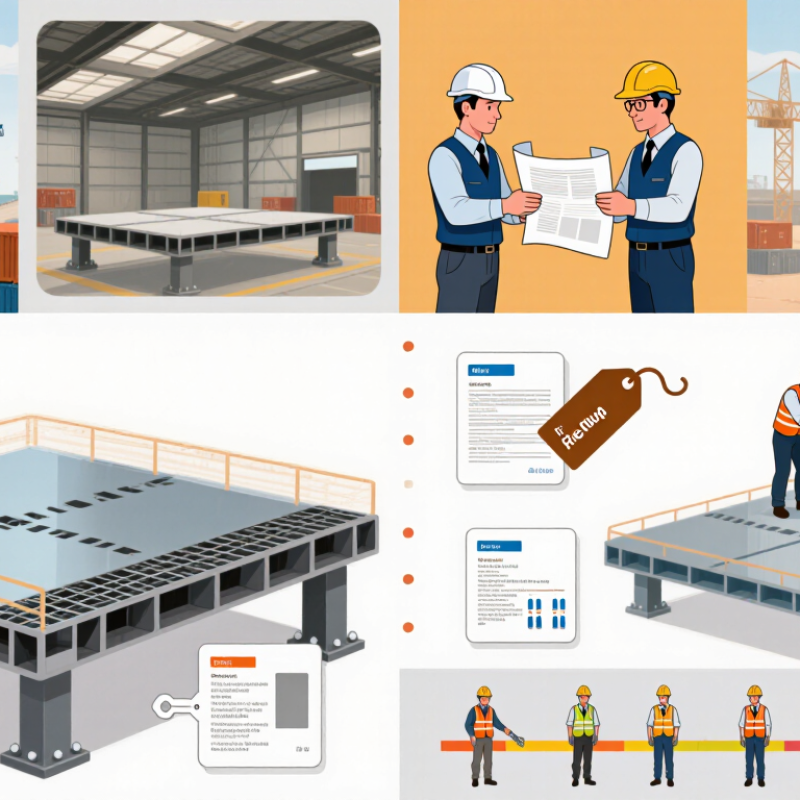
What Defines a High-Quality Steel Platform for Global Buyers?
A high-quality steel platform begins with verified performance, not attractive photographs. Its design should state the working load, point load, span, deflection limit, and safety factor. These details help buyers compare products across different markets. Engineers should review the platform’s intended use, including forklifts, storage racks, stairs, or maintenance access. A platform that feels rigid during a showroom visit may still perform poorly under repeated industrial loading.
Material traceability is equally important. Each major component should connect to a documented steel grade, heat number, and inspection record. Welds need consistent penetration, clean finishing, and checks for cracks or visible porosity. Third-party testing can strengthen confidence, especially when the supplier and buyer operate in different countries. Relevant structural standards should be identified clearly, rather than mentioned vaguely. Small details matter.
Corrosion protection also reveals manufacturing discipline. Buyers should examine coating thickness, surface preparation, drainage points, and exposed cut edges. Galvanized or painted surfaces need suitable protection for humidity, salt air, and temperature changes. I have seen platforms arrive with excellent frames but damaged corners after weak export packaging. That mistake is easy to underestimate. Clear drawings, installation instructions, load labels, and replacement-part records make global purchasing more reliable. Still, no document can replace an independent inspection when the application is critical.
| Evaluation Dimension | High-Quality Benchmark | Verifiable Evidence to Request | Why It Matters to Global Buyers | Recommended Status |
|---|---|---|---|---|
| Product Specification Accuracy | Complete grade, dimension, thickness, tolerance, surface finish, and application information | Technical data sheet, applicable ASTM, EN, ISO, JIS, or equivalent standard, and clearly stated tolerances | Reduces the risk of receiving material that does not fit the buyer’s design, processing, or regulatory requirements | Essential |
| Quality Management | An active ISO 9001-certified quality management system or equivalent documented controls | Valid certificate, certification scope, issuing body, certificate number, and expiration date | Demonstrates that purchasing, production, inspection, and corrective-action processes are formally controlled | Essential |
| Material Traceability | Traceability from the delivered product back to the heat, batch, coil, or production lot | Heat number, batch number, packing list, product marking, and matching mill test certificate | Supports quality investigations, compliance audits, warranty claims, and consistent repeat purchasing | Essential |
| Inspection Documentation | Mill test certificate with chemical composition, mechanical properties, dimensions, and test results | EN 10204 Type 3.1 certificate where required, or an equivalent certificate accepted by the buyer’s specification | Provides documented evidence that the supplied steel meets the agreed technical requirements | Essential |
| Supplier Verification | Documented checks covering legal identity, manufacturing or trading capability, quality history, and export experience | Business registration, facility information, audit records, production capability, and verifiable trade references | Helps buyers distinguish qualified suppliers from brokers with limited control over material quality or delivery | Essential |
| International Trade Readiness | Clear use of Incoterms® 2020, destination port options, packing terms, export documents, and customs information | Quotation showing the named place or port, commercial invoice, packing list, certificate of origin, and shipping procedure | Improves landed-cost accuracy and clarifies which party is responsible for freight, insurance, customs, and risk | Essential |
| HS Code and Compliance Data | Product classification and country-specific compliance requirements are reviewed before shipment | Proposed HS code, product description, country-of-origin details, and required conformity documents | Reduces customs delays, classification disputes, unexpected duties, and import compliance problems | Essential |
| Inspection Options | Pre-shipment inspection, document review, dimensional checks, and independent testing are available when required | Inspection checklist, acceptance criteria, sampling method, laboratory accreditation, and inspection report format | Creates an objective quality checkpoint before the goods leave the exporting country | Highly Recommended |
| Quotation Transparency | Price, currency, quantity basis, validity period, production lead time, packaging, and delivery term are all stated | Itemized quotation with minimum order quantity, payment schedule, surcharges, and validity date | Allows buyers to compare offers fairly and avoid hidden costs or ambiguous commercial assumptions | Essential |
| Response and RFQ Management | Technical questions and RFQs are answered with consistent specifications, quantities, and delivery assumptions | Structured RFQ form, quotation revision history, named contact, and documented response times | Improves procurement efficiency and prevents errors caused by incomplete or inconsistent communication | Highly Recommended |
| Logistics Visibility | Order milestones are visible from confirmation through production, inspection, loading, and shipment | Production schedule, container or vessel information, shipping documents, and tracking updates | Enables buyers to coordinate inventory, downstream production, customs clearance, and customer commitments | Highly Recommended |
| Packaging and Marking | Packaging is suitable for ocean, rail, or road transport and includes durable product identification | Packing specification, bundle or coil markings, corrosion-protection method, weight details, and photographs before loading | Protects steel from moisture, handling damage, identification loss, and delivery disputes | Essential |
| Payment Protection | Payment milestones are linked to verifiable commercial or quality events, with clearly documented dispute procedures | Contract terms, bank details verified through an independent channel, inspection conditions, and refund or claim process | Reduces financial exposure and provides a clearer remedy if documents, quality, or shipment conditions are not met | Highly Recommended |
| Claims and After-Sales Support | Written process for nonconformity claims, evidence submission, response deadlines, and corrective action | Claim form, warranty or quality terms, escalation contact, and examples of required evidence | Ensures that quality issues can be resolved through a defined process rather than informal negotiation | Highly Recommended |
| Sustainability Information | Relevant environmental and responsible-sourcing information is disclosed without unsupported claims | Environmental certificates, recycled-content data, emissions information, energy data, or responsible-sourcing policies | Supports customer sustainability reporting, tender requirements, and responsible procurement decisions | Recommended |
| Best-practice selection rule: prioritize platforms that provide verifiable supplier credentials, complete technical documentation, traceable material records, transparent Incoterms® 2020 quotations, independent inspection options, and a documented claims process. Certification and compliance requirements should always be confirmed against the buyer’s destination country, contract, and product standard. | ||||
It should state working load, point load, span, deflection limit, and safety factor. These figures support fair comparisons across markets. Photos are not enough.
Request a current mill test certificate. It should show chemical composition, yield strength, tensile strength, and elongation. Check the testing standard carefully. Similar grade names may follow different regional specifications.
No. Weak welds, bolted joints, or poor connections can control the failure risk. Engineers should calculate dead loads, live loads, impact forces, and uneven loading. Strength alone is not safety.
Look for consistent penetration, clean finishing, and evidence of crack or porosity checks. Inspection records should identify major components and their steel heat numbers. A polished surface can still hide problems.
Check coating thickness, adhesion, edge coverage, weld areas, and exposed cut edges. Review surface preparation and drainage points. Salt air, humidity, chemicals, and temperature changes require different protection choices.
Small deviations can complicate installation, especially around stairs, grating, and handrails. Approved drawings should match the finished platform. Measure before dispatch.
Compare landed cost, not only the quoted unit price. Include inland transport, port handling, insurance, inspection, duties, and delivery charges. A cheap order may become expensive after one failed inspection.
Check port distance, shipping options, sailing frequency, customs documents, and shipment tracking. Weather, congestion, and freight increases can still delay delivery. Plans are not guarantees.
Keep approved drawings, load labels, installation instructions, inspection records, certificates, and replacement-part information together. These records clarify responsibility when site conditions change. Documents help, but they cannot replace independent inspection.
Choosing the best Steel Platforms for global industrial use requires more than comparing basic dimensions or initial prices. A high-quality platform should provide dependable load capacity, structural stability, corrosion resistance, safe access, and a surface finish suited to its working environment. Different applications may require fixed, modular, mobile, heavy-duty, or customized platforms, so buyers should match the design with equipment weight, operating conditions, installation space, and maintenance requirements. Evaluating steel grade, tensile strength, weld quality, coatings, and surface performance is essential for long-term reliability.
International buyers should also review supplier experience, production consistency, quality-control procedures, testing reports, and relevant certifications. Clear technical documentation and effective communication can reduce risks during ordering and installation. Beyond the quoted price, buyers should compare material specifications, packaging, shipping arrangements, lead times, import responsibilities, after-sales support, and expected service life. A platform that combines verified performance, efficient logistics, and durable construction often delivers greater long-term value than a cheaper option with uncertain quality.

 Shunyiming Racking