What Are the Top Steel Containers from China?

Time:2026-10-12 Author:Aria
0%

China remains the leading source for globally traded Steel Containers, especially ISO dry freight containers, tank containers, and specialized storage units. Drewry’s Container Census 2024 confirms China’s continuing dominance in container manufacturing and fleet supply. John Fossey, Drewry’s Head of Container Equipment and Leasing Research, has described China as “the dominant force in container manufacturing.” That influence is visible in busy factory yards, stacked corner castings, and standardized blue or gray boxes awaiting inspection.

Scale alone does not identify the top supplier. World Steel Association data recorded approximately 1.89 billion tonnes of crude steel production worldwide in 2023. Buyers should examine steel grade, welding quality, coating thickness, floor treatment, door seals, and CSC certification. For shipping units, ISO 668 dimensions and CSC safety approval remain essential. For drums or process containers, UN performance certification may apply to specific regulated materials, but each use requires professional verification.

The strongest Chinese manufacturers usually provide factory inspection records, weld testing, load data, and traceable material certificates. These details matter when a container faces salt air, forklift impact, or repeated lifting. Small flaws become expensive later.

However, supplier rankings are not permanent. Prices change. Factory capacity changes. Some online claims appear impressive but lack independent evidence. This introduction therefore compares leading Chinese Steel Containers through measurable criteria, including durability, compliance, customization, delivery reliability, and after-sales support. The best choice may not be the cheapest box. It may be the one that remains safe, dry, and structurally sound after years of hard service.
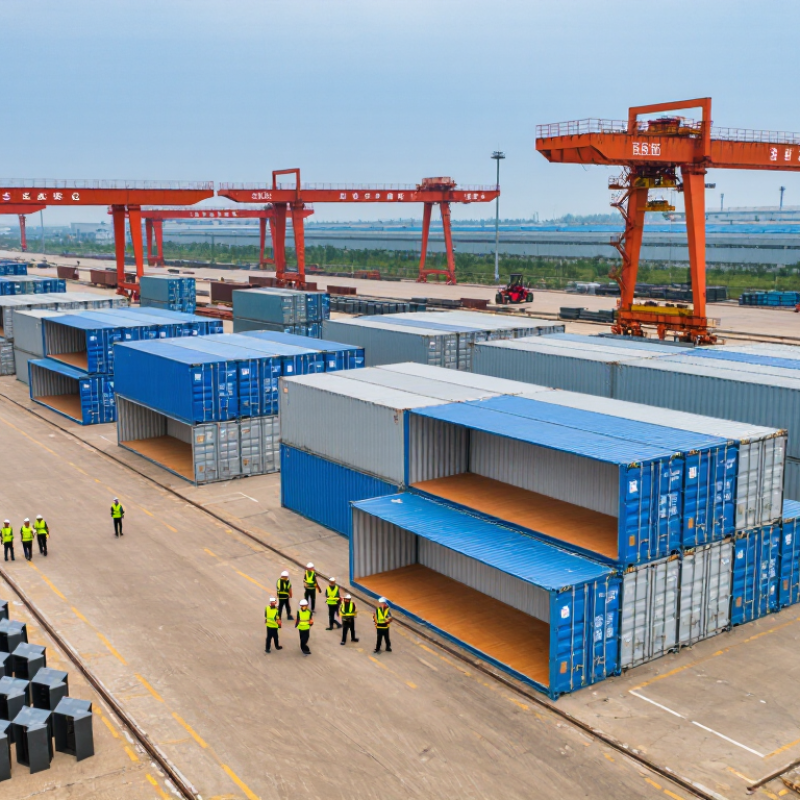
What Are the Top Steel Containers from China?

What Are Steel Containers from China?

What Are the Top Steel Containers from China?

Steel containers from China are industrial boxes manufactured mainly from weather-resistant steel, with reinforced corner fittings, corrugated panels, locking doors, and treated floors. They support ocean transport, rail freight, storage, and temporary site use. Most standard freight units follow ISO 668 dimensions and ISO 1496 performance requirements. Common sizes include 20-foot and 40-foot units, with internal heights near 2.39 meters in standard models.

China remains a major steel producer. The World Steel Association reported approximately 1.019 billion tonnes of crude steel production in China during 2023, out of about 1.892 billion tonnes worldwide. This scale supports broad access to steel plate, welding capacity, coating systems, and container assembly. However, production volume does not guarantee container quality. Inspection still matters.

A dependable evaluation checks plate thickness, weld penetration, door alignment, floor loading, corner fitting accuracy, and coating coverage. The Bureau of International Containers and Intermodal Transport recommends structural and safety checks throughout a container’s service life. Look for traceable inspection records, measurable dimensions, and documented load tests. The weak point is often corrosion protection, especially around door frames and lower rails. Small flaws can spread after repeated handling. I would not judge a container by clean paint alone. Reports vary by year, and published factory data may omit repair rates. That gap deserves careful questioning.

Which Types of Steel Containers Are Commonly Made in China?

China commonly manufactures steel drums for oils, coatings, powders, and other industrial materials. The familiar 200-liter drum usually has a tight-head or open-head design. Tight-head drums suit liquids, while open-head versions allow easier filling and cleaning. Buyers should check the lid gasket, locking ring, internal coating, and seam quality. A small leak can become an expensive problem.

Steel pails are another common choice. They often hold adhesives, paints, lubricants, and construction compounds. Their smaller size makes manual handling easier. Some include wire handles, snap-on lids, or lever-lock closures.

Steel boxes and tool chests are also widely produced for workshops, warehouses, and transport vehicles. Their value depends on sheet thickness, corner reinforcement, hinge strength, and corrosion protection.

For heavier logistics work, Chinese factories make reusable steel shipping containers, stillages, roll cages, and stackable bins. These products may use welded frames, removable doors, forklift pockets, and galvanized surfaces. Storage tanks and pressure-rated vessels require closer technical review. Material grades, welding procedures, testing records, and applicable transport standards must match the intended use. Do not trust painted surfaces alone. They can hide weak welds or early rust. A factory sample, dimensional inspection, coating test, and load test provide better evidence. Low pricing is attractive, but I have seen specifications become unclear when buyers request too many changes. Clear drawings and written acceptance criteria prevent many avoidable disputes.

What Materials and Manufacturing Standards Define Their Quality?

Steel containers from China vary greatly in quality, even when their drawings look identical. Material selection is the first dividing line. Carbon steel suits general cargo and industrial storage. Weathering steel offers better outdoor resistance, but it still needs suitable drainage and inspection. Stainless steel performs better against corrosion, especially around moisture or chemicals.

The World Steel Association reported 1.89 billion tonnes of crude steel production worldwide in 2023. This scale supports broad material availability, but volume does not guarantee consistency. Buyers should request heat numbers, chemical composition, yield strength, and mill certificates. EN 10204 inspection documents can provide traceability. That detail is often overlooked.

Manufacturing standards matter just as much. ISO 668 defines freight-container dimensions, while ISO 1496-1 covers strength and testing requirements. For welded structures, ISO 3834 helps evaluate welding quality systems. Surface protection should follow a suitable coating specification, such as ISO 12944, when corrosion exposure is serious. In practice, factory inspections should check weld penetration, door alignment, floor loading, coating thickness, and water ingress. One missed weld can matter more than a polished exterior.

Tips: Ask for test records, not promises. Inspect one finished unit before larger orders. Confirm steel grades against the design load. Small gaps around doors deserve attention. Some suppliers may provide excellent documents but inconsistent production; that uncomfortable possibility deserves a second inspection.

How Do Chinese Steel Containers Compare in Performance and Cost?

Chinese steel containers are available in several practical forms, including dry cargo, open-top, insulated, and equipment storage units. Their performance depends less on appearance than on steel thickness, welding quality, floor treatment, door alignment, and corrosion protection. In field inspections, uneven door gaps often reveal rushed fabrication. That detail matters.

Compared with many higher-cost alternatives, Chinese containers can offer competitive prices because of large production capacity and flexible customization. The purchase price, however, is only one part of the calculation. Add inland transport, port handling, import duties, inspection, repair, and possible coating work. A cheaper unit may become expensive if its floor panels swell or its locking bars need replacement. Reliable suppliers should provide material details, dimensional drawings, load information, and inspection records. Independent checks remain worthwhile.

Tips: Compare total landed cost, not the factory quotation alone. Ask for weld photographs and coating specifications. Check door seals under pressure, inspect corner castings, and measure the internal floor for deflection. Request a sample inspection before ordering a large quantity. Also, confirm the container’s intended climate and cargo use. A standard dry unit may perform well in mild weather but disappoint in coastal, humid, or freezing conditions. My own view is slightly cautious: factory efficiency is valuable, yet quality can vary between production batches. Clear specifications and documented inspection reduce that uncertainty.

What Are the Top Steel Containers from China? - How Do Chinese Steel Containers Compare in Performance and Cost?
Container Type Typical External Dimensions (L × W × H) Typical Internal Volume Typical Tare Weight Typical Maximum Gross Mass Typical Payload Performance Profile Indicative China Export Price* (USD) Best-Fit Applications
20-Foot Standard Dry Container 6.058 m × 2.438 m × 2.591 m Approximately 33.1 m³ Approximately 2,200–2,400 kg Typically 30,480 kg Approximately 28,000 kg, subject to tare weight and local regulations High structural strength, weather-resistant steel shell, steel cargo doors, and marine plywood or bamboo-composite flooring. A practical option where payload efficiency and compact handling are important. $1,800–$3,200 for a new standard unit General cargo, machinery, building materials, tools, and storage
40-Foot Standard Dry Container 12.192 m × 2.438 m × 2.591 m Approximately 67.7 m³ Approximately 3,700–4,000 kg Typically 30,480 kg Approximately 26,500–26,800 kg, subject to tare weight and local regulations Provides nearly twice the volume of a 20-foot unit with a similar maximum gross mass. It is efficient for high-volume, relatively light cargo but may be limited by road axle-load rules when heavily loaded. $2,500–$4,200 for a new standard unit Cartons, consumer goods, furniture, pallets, and export distribution
40-Foot High-Cube Dry Container 12.192 m × 2.438 m × 2.896 m Approximately 76.4 m³ Approximately 3,900–4,300 kg Typically 30,480 kg Approximately 26,200–26,500 kg, subject to tare weight and local regulations Offers about 30 cm more internal height than a standard container, increasing cubic capacity. The additional height is useful for bulky, lightweight cargo but can increase wind exposure and handling constraints. $2,700–$4,500 for a new standard unit Light industrial products, furniture, retail goods, insulation materials, and volumetric cargo
20-Foot Open-Top Container Approximately 6.058 m × 2.438 m × 2.591 m Approximately 32–33 m³ Approximately 2,300–2,700 kg Typically 30,480 kg Approximately 27,700–28,100 kg, subject to tare weight and local regulations Removable roof structure allows loading of tall or heavy cargo by crane. It generally provides less weather protection than a fully enclosed dry container unless a tarpaulin is correctly installed. $3,000–$5,000 for a new unit Stone, scrap metal, timber, industrial equipment, and oversized cargo
20-Foot Flat-Rack Container Approximately 6.058 m × 2.438 m × 2.591 m Not enclosed; usable deck area is approximately 12–13 m² Approximately 2,500–3,000 kg Common ratings range from 34,000 to 36,000 kg Approximately 31,000–33,500 kg, subject to the certified rating Reinforced end frames and lashing points support concentrated or oversized loads. Cargo is exposed to weather and usually requires careful securing and route planning. $4,500–$8,000 for a new unit Construction machinery, tanks, pipes, generators, and project cargo
40-Foot High-Cube Reefer Container Approximately 12.192 m × 2.438 m × 2.896 m Approximately 67–68 m³ Approximately 4,500–5,200 kg Typically 34,000 kg, depending on the certified unit Approximately 28,800–29,500 kg, subject to tare weight and local regulations Insulated steel-panel construction and an integrated refrigeration unit normally support controlled-temperature operation, commonly around -25°C to +25°C. Energy use, set point, cargo temperature, and ambient conditions affect actual performance. $18,000–$30,000 for a new unit Frozen food, chilled products, pharmaceuticals, flowers, and temperature-sensitive cargo
Insulated Steel Storage Container Commonly based on 20-foot or 40-foot ISO dimensions Approximately 30–76 m³, depending on size and insulation thickness Typically 2,500–5,000 kg Usually designed around the applicable ISO container rating Depends on the structure, floor rating, and transport certification Sandwich panels or internal insulation improve thermal stability compared with an uninsulated dry container. It is suitable for storage but should not be treated as refrigerated equipment unless an approved cooling system is installed. $3,500–$9,000 for a new unit Workshops, site storage, document storage, equipment rooms, and temporary facilities
Used One-Trip or Refurbished Dry Container Usually follows standard 20-foot, 40-foot, or 40-foot high-cube dimensions Approximately 33–76 m³ Approximately 2,200–4,300 kg, depending on size and modifications Typically 30,480 kg for standard dry units Determined by the current tare weight and certification plate Usually offers the lowest purchase cost. Condition varies by manufacturing batch, handling history, floor wear, door seals, corrosion, and repairs; inspection is essential before purchase. $1,000–$2,800 for a used or refurbished dry unit Stationary storage, workshops, farm use, construction sites, and non-critical cargo
Data and purchasing notes: Dimensions and load ratings are typical ISO-container values; the container’s CSC safety-approval plate, manufacturer specification, and local transport regulations take precedence. Prices are indicative China export ranges for standard units before ocean freight, insurance, import duty, inland delivery, customization, refrigeration power equipment, taxes, and certification fees. Actual quotations vary with steel prices, exchange rates, order quantity, port, finish, inspection requirements, and delivery terms. Chinese-made containers can provide competitive cost and good performance when weld quality, weather-tightness, flooring, corrosion protection, door operation, and valid certification are verified.

How Can Buyers Choose the Right Chinese Steel Container?

Choosing the right Chinese steel container starts with its intended route, cargo, and handling environment.

The World Steel Association reported that China produced 1,019.1 million tonnes of crude steel in 2023. Large output does not guarantee consistent container quality. Buyers should request steel grade certificates, mill traceability, and documented welding procedures. Check the corner castings, door bars, floor cross-members, and roof seams closely. Small weld defects can become serious water-entry points.

Dimensions should follow ISO 668, while structural performance should align with ISO 1496-1 and the Convention for Safe Containers. Ask for verified tare weight, maximum gross mass, payload rating, and inspection records. UNCTAD’s Review of Maritime Transport 2024 reported continued expansion in global container shipping capacity, but equipment availability and freight conditions still change quickly. A container suited to short domestic use may fail under repeated port lifting, stacking, and ocean exposure. Route matters.

Do not choose only by price. I would be cautious here. A cheaper unit may contain thinner panels, weaker flooring, or incomplete documentation. Compare steel thickness, coating system, floor material, drainage design, and spare-part support. Require photographs of hidden welds and a pre-shipment inspection by an independent surveyor. Salt-spray testing can help, although it does not perfectly predict years of field corrosion. That limitation deserves attention. Temperature, humidity, loading habits, and maintenance will influence service life as much as factory workmanship.

FAQS

What are steel containers from China used for?

They support ocean transport, rail freight, storage, and temporary construction-site use. Common sizes include 20-foot and 40-foot units. Standard interiors are about 2.39 meters high.

Which steel materials are commonly used?

Carbon steel suits general cargo and indoor storage. Weather-resistant steel performs better outdoors with proper drainage. Stainless steel handles moisture more effectively. Material choice should match the environment.

Do Chinese steel containers follow international standards?

Many standard units follow recognized size and strength requirements. Dimensional rules help maintain compatibility with transport systems. Strength standards cover lifting, stacking, and load testing. Compliance still requires written evidence.

What documents should buyers request?

Ask for mill certificates, heat numbers, and chemical composition records. Yield-strength data should match the container’s design load. Request welding records and documented load tests. Promises are not enough.

How can buyers inspect container quality?

Check plate thickness, weld penetration, and corner fitting accuracy. Open and close every door several times. Look for daylight around the door frame. Inspect floor loading and water entry.

Why is corrosion protection important?

Corrosion often begins near door frames, lower rails, and drainage points. A clean painted surface may hide weak preparation underneath. Coating thickness and coverage deserve measurement. Paint can deceive.

Does large-scale production guarantee reliable quality?

No. High steel output supports materials and manufacturing capacity. It does not guarantee consistent welding or coating quality. Repair rates may be missing from factory reports. That gap deserves questions.

What should buyers do before placing a large order?

Inspect one completed container before approving larger quantities. Compare its steel grade with the drawings and load requirements. Request traceable inspection records. A second inspection may feel excessive, but it can reveal inconsistent production.

Conclusion

Steel Containers from China cover a broad range of practical solutions for storage, transport, construction, agriculture, and industrial use. Common options include shipping containers, storage boxes, steel drums, insulated units, open-top designs, and customized containers with doors, vents, shelving, or special dimensions. Their quality is generally determined by the type and thickness of steel, corrosion protection, welding precision, surface treatment, sealing performance, and compliance with relevant international and transportation standards. Reliable manufacturing also depends on consistent inspections, load testing, dimensional accuracy, and quality control throughout production.

Compared with containers made in many other markets, Chinese Steel Containers are often valued for their competitive pricing, varied customization options, and large production capacity. However, performance can differ significantly between suppliers, so buyers should evaluate material specifications, manufacturing tolerances, protective coatings, certifications, inspection records, delivery terms, and after-sales support. Selecting the right container requires matching its design and strength to the intended cargo, environment, handling method, service life, and budget. A clear technical specification and pre-shipment inspection can help ensure dependable quality and long-term value.

Aria

Aria

Aria is a dedicated marketing professional with a deep passion for innovative strategies and a keen understanding of our company's product offerings. With a wealth of experience in the industry, Aria excels at crafting engaging content that highlights the unique features and benefits of our......