What Are the Top Wire Shelving Types in 2026?

Time:2026-11-15 Author:Amelia
0%

Storage needs are changing, but the basics still matter: weight, space, moisture, and access. Wire Shelving remains a flexible option for homes, workshops, stockrooms, and commercial kitchens. Its open design can improve visibility and airflow, while adjustable shelves help make use of awkward corners and changing storage needs. In 2026, the best choice depends less on a product label and more on where the shelving will stand and what it must hold. Details matter.

This guide introduces popular types, including chrome-plated, stainless-steel, coated, heavy-duty, and mobile wire shelving. It explains practical differences, such as corrosion resistance, ease of cleaning, mobility, and typical applications. A dry pantry may suit chrome shelving, while humid areas often call for a more corrosion-resistant finish. Rolling units can help in busy work areas, but wheels need a stable surface and suitable locking features. No single type fits every space.

Load ratings deserve careful attention. They can vary by manufacturer, shelf configuration, and how evenly items are distributed. Check the product specifications and assembly guidance before choosing a unit; do not assume every shelf supports the same weight. This comparison focuses on useful selection criteria rather than declaring one universal winner. Some trade-offs are easy to miss in product descriptions. That is worth considering. By comparing these types and their everyday strengths, readers can make a more informed choice for their space.
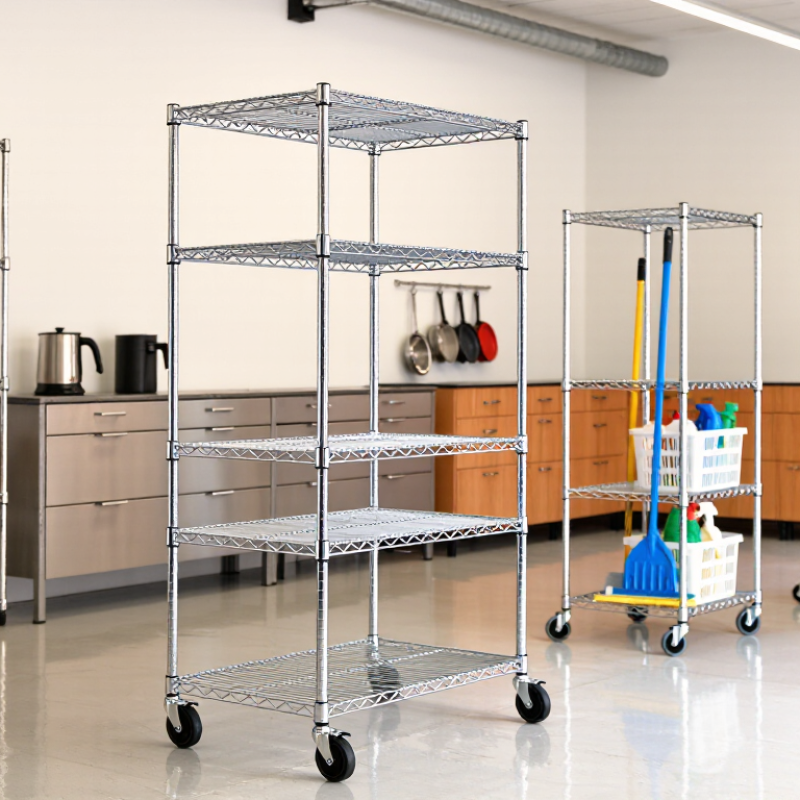
What Are the Top Wire Shelving Types in 2026?

How Wire Shelving Is Designed and Classified

What Are the Top Wire Shelving Types in 2026?

How Wire Shelving Is Designed and Classified

Wire shelving is designed around an open metal grid, upright posts, and adjustable shelf supports. The grid lets air and light pass through, while its wire thickness and spacing affect strength and everyday use. Narrow gaps help hold small containers. Wider gaps can make cleaning easier, but may let small items tip or slip. Small details matter.

Shelving is commonly classified by how it stands or attaches. Freestanding units suit storage rooms and kitchens where layouts may change. Wall-mounted shelves save floor space, but need secure attachment to suitable wall structures. Mobile units add casters for movement; locking wheels help keep them steady during use. A shelf can look sturdy and still wobble if its posts are uneven or its load is poorly balanced.

Design also varies by finish, shelf shape, and intended environment. Chrome-plated wire is often used indoors, while coated or stainless-steel options may better suit damp settings. “Rust-resistant” does not mean maintenance-free. Check the maker’s load rating and spread weight across each shelf, rather than concentrating heavy objects in one corner. I would not choose by appearance alone: measure the stored items, allow room for airflow, and consider how often the shelves will be moved.

Which Wire Shelving Types Lead in 2026

Which Wire Shelving Types Lead in 2026

In 2026, adjustable steel wire shelving remains a practical all-rounder for stockrooms, pantries, and back-of-house areas. Its clip-adjusted shelves fit changing carton heights without tools. Epoxy-coated units suit humid rooms, while chrome finishes work well in clean, dry spaces. For frequent picking, mobile racks reduce walking; fixed, heavy-duty frames are better for dense bins. No single type wins everywhere.

The U.S. Census Bureau reported 2024 U.S. retail e-commerce sales of $1.1926 trillion, or 16.1% of total retail sales. That figure does not rank shelving types, but it helps explain why adaptable storage matters to fulfillment teams. A small operation may value a movable rack, while a busy stockroom may need stable shelves with clearly rated load limits. One detail is easy to miss: wire shelves can allow dust to fall onto items below.

Tips: Check the stated capacity for each shelf, not just the whole unit. Measure your largest box and leave room for airflow. Then test access with a loaded rack; an awkward layout can erase the time saved by mobile shelving.

How Each Wire Shelving Type Is Used

What Are the Top Wire Shelving Types in 2026?
How Each Wire Shelving Type Is Used

Stationary wire shelving works well in pantries, stockrooms, and laundry areas where items stay put. Its open grids let light pass through and make dust easier to spot. Keep it simple. Place heavier cartons on lower shelves, and check the rated capacity before loading; limits vary by design and installation.

Mobile wire shelving is useful in clinics, kitchens, and workshops that need flexible storage. Lockable casters help keep a loaded unit in place during use. Measure doorways and turning spaces first. A shelf that rolls easily when empty may feel awkward once bins and supplies are added.

Wall-mounted wire shelves free floor space in compact rooms, utility closets, and work areas. They suit lighter, frequently used items, provided the wall and fasteners can support the load. Adjustable systems make it easier to change shelf heights as needs shift. Not every wall is suitable. Check the mounting surface, keep items within reach, and avoid placing fragile objects where they could fall. A common oversight is choosing shelf depth by appearance alone; deeper shelves can make stored items harder to access.

What Are the Top Wire Shelving Types in 2026? — How Each Wire Shelving Type Is Used
Wire Shelving Type Typical Construction Common Uses Key Advantages Things to Consider
Chrome-Plated Steel Steel wire shelves with a bright chrome finish. Dry storage in closets, pantries, stockrooms, and retail back rooms. Open design supports visibility and airflow; adjustable shelves make it easy to organize changing inventories. Best suited to dry indoor environments. The finish can corrode if exposed to persistent moisture or harsh chemicals.
Epoxy-Coated Steel Steel wire shelves covered with a protective epoxy coating, commonly available in colors such as green or black. Storage areas with higher humidity, including some laundry rooms, cooler areas, and food-service spaces. The coating provides an added barrier against moisture and helps protect the steel surface. Coating condition matters: chips or scratches can expose the underlying steel. Check that the product is suitable for the specific environment and cleaning routine.
Stainless-Steel Wire Wire shelves and frames made from stainless steel. Commercial kitchens, laboratories, healthcare settings, and other areas with frequent cleaning or moisture exposure. Resists corrosion better than ordinary plated steel and is suitable for many demanding, washable environments. Grades and corrosion resistance vary. Confirm the stainless-steel grade and cleaning compatibility for the intended application.
Polymer-Coated Wire Steel wire with a thicker plastic or polymer coating. Closets, utility rooms, damp storage areas, and spaces where a softer shelf surface is useful. The coating helps protect stored items from direct contact with metal and can reduce rattling or scratching. Check the coating's temperature and chemical limits. Damaged coating may reduce protection against corrosion.
Mobile Wire Shelving A wire shelving unit fitted with casters, often with brakes or locking wheels. Workrooms, kitchens, stock areas, and other spaces where supplies need to move between workstations. Provides flexible storage and can be repositioned for cleaning or workflow changes. Mobile capacity depends on the unit, casters, and load distribution. Lock the wheels when stationary and avoid uneven or overloaded shelves.
Wall-Mounted Wire Shelving Wire shelves supported by wall brackets or a wall-mounted track system. Garages, pantries, utility rooms, and work areas where floor space is limited. Uses vertical space while leaving the floor clear for access and cleaning. Safe capacity depends on wall construction, fasteners, brackets, and installation. Attach supports to suitable structural backing and follow the installation instructions.

What Factors Distinguish Wire Shelving Systems

Wire shelving systems differ in finish, load rating, mobility, and how openly they let air and light pass. Chrome-plated units suit dry stockrooms, while epoxy-coated finishes handle damp spaces better. Stainless steel is useful where frequent washdowns are part of the routine. Wire decks help air circulate and make dust easier to spot, but small items may need shelf liners. A small detail, easily missed.

The frame matters as much as the finish. Check the rated capacity per shelf, not just the total unit capacity, and note whether the rating assumes evenly distributed weight. Thicker posts and secure shelf collars can reduce wobble; casters add flexibility but may lower the safe load.

The U.S. Bureau of Labor Statistics reported 4.4 recordable injury cases per 100 full-time workers in transportation and warehousing in 2023. That figure does not prove shelving caused injuries, but it reinforces the value of stable layouts and clear access.

MHI’s 2024 Annual Industry Report found that 55% of respondents planned to increase investment in supply-chain innovation. As storage operations change, modular shelves can be easier to reconfigure, though frequent changes can loosen fittings if nobody checks them.

A neat specification sheet is not a substitute for inspecting the actual floor, load, and cleaning routine.

How to Choose the Right Wire Shelving Type

Choosing wire shelving starts with the room, not the catalog. For a dry pantry or stockroom, chrome-plated steel is often a practical choice. In damp areas, an epoxy-coated finish can offer better resistance to moisture. For frequent washdowns or harsher conditions, stainless steel may be more suitable, though it usually costs more. Check the care requirements for the actual environment; “moisture-resistant” does not mean maintenance-free.

Next, match the shelf dimensions and capacity to what you will store. Measure doorways, corners, and the tallest items before buying. Compare the stated load rating per shelf, and remember that weight should be spread evenly. A stack of dense boxes creates a different strain than light, bulky supplies. Adjustable shelves help when inventory changes, while casters can make a unit easier to reposition. They can also make a loaded rack less stable on uneven floors. Small detail. Locking wheels matter.

I still find it easy to underestimate access needs. If staff must reach the back of a deep shelf, a narrower unit or a different layout may work better. Consider how often items move, whether the rack needs to fit beneath a counter, and how much clearance is needed for cleaning. Confirm the manufacturer’s assembly and load instructions, and inspect joints and posts after setup. A shelf that fits the room but blocks daily movement is the wrong type.

What Are the Top Wire Shelving Types in 2026?

How to choose a finish for your environment

Chrome-plated shelving is commonly suited to dry indoor spaces, while epoxy-coated steel is a practical choice for humid areas. Stainless steel is generally preferred for wet or washdown environments. These are qualitative suitability guides, not standardized test scores; actual corrosion resistance depends on the material grade, coating, and conditions.

FAQS

Which wire shelving type is the most versatile in 2026?

Adjustable steel shelving suits stockrooms, pantries, and work areas. Clip-adjusted shelves fit different carton heights without tools.

When should I choose stationary wire shelving?

Choose it when stored items rarely move. Put dense cartons on lower shelves and check each shelf’s load rating.

What makes mobile wire shelving useful?

Casters help move supplies between work areas. Measure doorways and turning spaces, then test the loaded rack before relying on it.

Are locking casters important?

Yes, they help keep a mobile rack in place during use. Uneven floors can still make loaded shelving feel unstable. Small detail.

Which finish works best in damp rooms?

Epoxy-coated steel can resist moisture better than chrome finishes. Stainless steel may suit frequent washdowns, but usually costs more.

When is wall-mounted wire shelving a good choice?

It frees floor space in closets and compact work areas. Check the wall and fasteners, and keep heavier items within safe reach.

How should I choose shelf dimensions?

Measure your largest box, doorways, corners, and ceiling clearance. Deep shelves may look useful, but reaching items at the back can be awkward.

What details are easy to overlook when choosing shelving?

Check load capacity per shelf, not only for the entire unit. Leave room for airflow, cleaning, and daily movement. I still underestimate access needs sometimes.

Conclusion

Wire Shelving comes in a range of designs, from adjustable freestanding units to wall-mounted, mobile, and heavy-duty systems. These types are generally classified by their structure, load capacity, mobility, finish, and the environments they are designed to serve. In 2026, adaptable shelving remains a practical choice for homes, workplaces, retail spaces, and storage areas because open-wire construction supports airflow, visibility, and convenient access.

Each type suits different needs: mobile units help when stored items must move, while fixed or wall-mounted systems make efficient use of available space. Key differences include shelf adjustability, dimensions, stability, weight limits, and resistance to moisture or wear. Choosing the right Wire Shelving system starts with assessing what will be stored, how often it will be accessed, the available floor or wall space, and the conditions of the setting. Comparing these factors helps ensure the shelving is safe, functional, and suited to both current and future storage needs.

Amelia

Amelia

Amelia is a seasoned marketing professional with a wealth of expertise in our company’s core offerings. With an unwavering passion for driving growth and innovation, she plays a pivotal role in shaping our marketing strategies and enhancing brand visibility. A key aspect of her responsibilities......